Boston College Athletics
Friday, February 5
Tallahassee, FL

Boston College
at

FSU Winter XC Classic
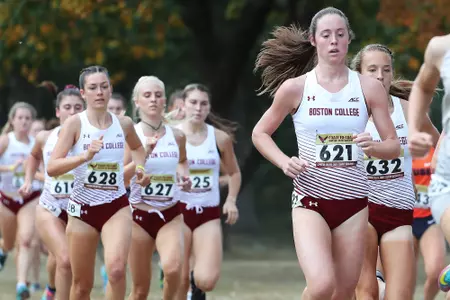
Photo by: John Quackenbos
Intertwined Seasons Converge For Cross Country and Indoor Track Teams
February 03, 2021 | Women's Track & Field, Women's Cross Country, #ForBoston Files
The most unique season of the college calendar brings two simlar sports together.
CHESTNUT HILL, Mass. -- This week's nor'easter snowstorm brought a new wave of excitement to the New England faithful. They piled out of their homes and built snow forts in their front yards, and kids reveled in an old fashioned school cancellation. The sense of normalcy gave the region a sigh of relief during its ongoing battle against COVID-19, and the natural beauty of snow-covered, icy trees crystallized the Rockwellian images.
Two feet of snow is a rite of passage for February in the Boston area, but the arctic blast dangled suboptimal news to the feet of the Boston College women's cross country and track & field teams, two sports reliant on an outdoor nature in training.
"We mapped out a good, solid 200 meters in the (Alumni Stadium) Bubble," head coach Randy Thomas said. "We can have a 50-person capacity in there, and the staff worked closely together to do a really good job for training. Wednesday was the first workout where we had most groups in there, and it was really well-coordinated with what went well."
A dual calendar is arguably the most unique situation among any college sport in the current pandemic era, but Boston College is attacking it with an open mind to its athletes. Women's cross country requires trail-based running over 5,000 meters during the fall season and runners are capable of training both outside and with specific anaerobic workouts. The race pace teaches their bodies how to run through changing conditions both on the course and within a changing climate.
That's the polar opposite of an indoor track season built around standardized curves and lanes, but both schedules are mashed together this year as the result of the decision to move fall championships into the spring. The BC women's cross country team - currently ranked #29 on the USTFCCCA National Poll - opens up its season on Friday with the Winter XC Classic at Florida State before rejoining the rest of the track team next week for the Tiger Paw Invitational at Clemson.
"Whenever they can do something shorter on a high-end anaerobic, they can keep distances," Thomas said. "The distance runners average anywhere from 50 to 65 miles per week throughout the year, and their long run is 13 miles. So they're able to get volume, but what they're missing is during the week is because they don't have the venues. It's tough to do those training runs on the roads, and it's very, very different because tracks are unavailable."
Women's cross country will run in just one other meet - the FSU Last Chance Meet - in March before competing on March 15 at the NCAA Championship in Stillwater, Oklahoma. It's one week after the ACC Indoor Track & Field Championship and only days after the NCAA Indoor Track & Field Championship hosted by Arkansas.
It's a completely revamped schedule built by the dizzying differences between a normal season and this year's frenetic spring. Massachusetts hosts some of the best cross country and indoor track meets in the nation throughout a normal season, and BC competed in many of those during the 2019-20 academic year. From Franklin Park's cross country courses, to some of the best indoor tracks at Harvard and BU, none of those are on the schedule this year. Indoor facilities known for their expansive hosting abilities are either shut down or unavailable. The Reggie Lewis Center in Roxbury, a state staple at the high school level, is now a COVID vaccination clinic.
"It's been tough to find anything in New England," Thomas said, "but we lined up two cross country races at Florida State, and we're going to send about a dozen athletes down to Clemson for an indoor meet. The closest available indoor track for competition is at West Point, so we are having a dual meet indoors on February 20. All of that leads right into the ACC."
It's a condensed version of a season built around large-scale or long-term training, but the Eagles are attacking it head-on with an unmatched enthusiasm. They individually trained during the down period between semesters with an unflappable commitment to their programs and took full advantage of a mild December and January. They returned this week with full excitement to work together, even in the modified setting, and didn't let any restrictions inhibit their cohesion. That chemistry is the glue in a sport most identified by individual success, and it's why the team's confidence and positive outlook remains untouched and undisturbed by winter's untimely arrival.
"It's a very positive atmosphere," Thomas said. "This is obviously an extremely challenging time, but the university is dealing with it exceptionally well. We're adapting to different situations. The kids have a very strict protocol that they have to follow, and they're willingly doing that. There's no complaining or griping. They're just going out and getting everything done that they need to do.
"You don't have the same venues," he said. "You don't have the reservoirs or trails, and it's been difficult to do 'temple training' when roads are icy or not plowed. The type of training that you do to prepare for cross country is totally different now than what you'd do in the fall. But I love what I'm doing, and it's a learning experience every day."
Boston College opens up its spring cross country season on Friday with this weekend's FSU Winter XC Classic in Tallahassee, Florida. It will compete next week in the Tiger Paw Invitational indoor track meet at Clemson on February 12 and 13 before facing off with Army in its only indoor dual meet on February 20.
Two feet of snow is a rite of passage for February in the Boston area, but the arctic blast dangled suboptimal news to the feet of the Boston College women's cross country and track & field teams, two sports reliant on an outdoor nature in training.
"We mapped out a good, solid 200 meters in the (Alumni Stadium) Bubble," head coach Randy Thomas said. "We can have a 50-person capacity in there, and the staff worked closely together to do a really good job for training. Wednesday was the first workout where we had most groups in there, and it was really well-coordinated with what went well."
A dual calendar is arguably the most unique situation among any college sport in the current pandemic era, but Boston College is attacking it with an open mind to its athletes. Women's cross country requires trail-based running over 5,000 meters during the fall season and runners are capable of training both outside and with specific anaerobic workouts. The race pace teaches their bodies how to run through changing conditions both on the course and within a changing climate.
That's the polar opposite of an indoor track season built around standardized curves and lanes, but both schedules are mashed together this year as the result of the decision to move fall championships into the spring. The BC women's cross country team - currently ranked #29 on the USTFCCCA National Poll - opens up its season on Friday with the Winter XC Classic at Florida State before rejoining the rest of the track team next week for the Tiger Paw Invitational at Clemson.
"Whenever they can do something shorter on a high-end anaerobic, they can keep distances," Thomas said. "The distance runners average anywhere from 50 to 65 miles per week throughout the year, and their long run is 13 miles. So they're able to get volume, but what they're missing is during the week is because they don't have the venues. It's tough to do those training runs on the roads, and it's very, very different because tracks are unavailable."
Women's cross country will run in just one other meet - the FSU Last Chance Meet - in March before competing on March 15 at the NCAA Championship in Stillwater, Oklahoma. It's one week after the ACC Indoor Track & Field Championship and only days after the NCAA Indoor Track & Field Championship hosted by Arkansas.
It's a completely revamped schedule built by the dizzying differences between a normal season and this year's frenetic spring. Massachusetts hosts some of the best cross country and indoor track meets in the nation throughout a normal season, and BC competed in many of those during the 2019-20 academic year. From Franklin Park's cross country courses, to some of the best indoor tracks at Harvard and BU, none of those are on the schedule this year. Indoor facilities known for their expansive hosting abilities are either shut down or unavailable. The Reggie Lewis Center in Roxbury, a state staple at the high school level, is now a COVID vaccination clinic.
"It's been tough to find anything in New England," Thomas said, "but we lined up two cross country races at Florida State, and we're going to send about a dozen athletes down to Clemson for an indoor meet. The closest available indoor track for competition is at West Point, so we are having a dual meet indoors on February 20. All of that leads right into the ACC."
It's a condensed version of a season built around large-scale or long-term training, but the Eagles are attacking it head-on with an unmatched enthusiasm. They individually trained during the down period between semesters with an unflappable commitment to their programs and took full advantage of a mild December and January. They returned this week with full excitement to work together, even in the modified setting, and didn't let any restrictions inhibit their cohesion. That chemistry is the glue in a sport most identified by individual success, and it's why the team's confidence and positive outlook remains untouched and undisturbed by winter's untimely arrival.
"It's a very positive atmosphere," Thomas said. "This is obviously an extremely challenging time, but the university is dealing with it exceptionally well. We're adapting to different situations. The kids have a very strict protocol that they have to follow, and they're willingly doing that. There's no complaining or griping. They're just going out and getting everything done that they need to do.
"You don't have the same venues," he said. "You don't have the reservoirs or trails, and it's been difficult to do 'temple training' when roads are icy or not plowed. The type of training that you do to prepare for cross country is totally different now than what you'd do in the fall. But I love what I'm doing, and it's a learning experience every day."
Boston College opens up its spring cross country season on Friday with this weekend's FSU Winter XC Classic in Tallahassee, Florida. It will compete next week in the Tiger Paw Invitational indoor track meet at Clemson on February 12 and 13 before facing off with Army in its only indoor dual meet on February 20.



Wednesday, October 07
Wednesday, October 07
Monday, October 05
Saturday, October 03