Boston College Athletics
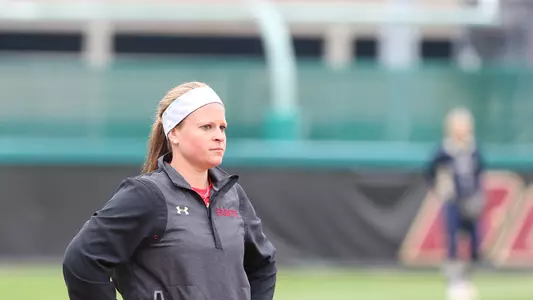
Obrest's Passion Leading Eagles To New Heights
May 10, 2017 | Softball, #ForBoston Files
Eagles head coach looking to finish what she started when BC joined ACC in 2006.
Back in 2007, Ashley Obrest remembers talking about career plans with her softball teammates. Her senior season winding down, graduation was around the corner and with it, brought the same conversation that happens every year. They talked about what jobs they were looking at, what careers they wanted to begin.
For Obrest, there was only one option. She was going into softball. She wanted to make a career out of the game she loved and she wanted to stay in the sport as long as possible. She knew it would begin small, with a graduate assistant's position or maybe an assistant coaching job. Like others, it had to start somewhere.
"I didn't freak out because I knew I wanted to coach," she said. "I did joke, though, that I would come back to Boston College to coach them one day."
It might've started as a joke, but there's no humor in what she's accomplished. Now in her sixth year as head coach, Obrest helped build the Boston College softball program into an Atlantic Coast Conference powerhouse. It's a process that's been carried out according to a plan, with a singular goal in mind, with the passion that comes from her alumna status.
It's a process that began with her arrival in the 2004 season. She made an immediate impact on a team coming off of an NCAA Tournament berth, starting all but one game during her first two seasons. She hit .297 as a freshman, then chased it with a .278 average and .519 slugging percentage as a sophomore. During that 2004 rookie year, the Eagles won 33 games, including an 11-9 conference record in the Big East.
"When I went through the recruiting process, the Big East was a very big deal," Obrest said. "The conference was a very good conference and it was attractive. There were some good schools there, and for two years, it was softball at an unreal level."
Following that '05 season, Boston College underwent its own transformation. The Eagles left the Big East for the Atlantic Coast Conference, beginning play in arguably the nation's best league. After a 22-win season in 2006, Obrest helped call and catch every pitch during BC's first-round upset of NC State in the 2007 conference tournament. Though she wouldn't reach the national tournament, it's an experience that stuck out in her mind.
"We made the switch to the ACC and didn't really know what to expect," she said. "We had played a couple ACC schools in preseason tournaments but hadn't played them every week. The talent level was at a whole new level. In the Big East, we could've made some mistakes and still won games, but in the ACC that's not something that happens. It opened our eyes, but at the same time, it really motivated our team. We didn't want to take five years to make an impact. We wanted to shock everyone."
For many, the road would've ended at that point. The end of a college career is the end of it all for many NCAA student-athletes. But Obrest had wanted to get into coaching. After a year as a private instructor and assistant coach at Concordia, she landed as an assistant coach at Colgate University for two seasons. In 2011, she became the head coach of the program and immediately led the team to 27 wins and the Raiders' first Patriot League regular-season championship.
"I knew Colgate was going to be different from anything I'd ever done," Obrest said. "I wanted to soak it up and learn as much as I could. I was surrounded by good administrators and coaches and there was a good staff in softball. They really threw me right into the fire and gave me responsibility to make our girls better athletes. I loved it there and it served as a motivating factor for me. This was a school out in the middle of New York and I had to leave everyone behind to go out there."
But there was always a draw pulling from the East and the challenge to finish what she started with Boston College in the ACC.
"Shortly after the season, I had a chance to come back to Boston College," Obrest said. "It was really cool to come back, and it was a very comforting interview. I got to see a lot of the same people who were here and there's always that feeling that's there when you come back."
Almost immediately, her hire paid dividends. In her first year, the Eagles won 20 games for the first time in five seasons, beating a nationally-ranked team for the first time in three. In her third year, the Eagles went 30-23, their best record since they went to the national tournament, winning double-digit ACC games for the first time ever. That led to last season, when BC matched that 30-23 record but finished a best-ever fourth in the league with an ACC record over .500 for the first time.
"We wanted to get back to being a competitive team," Obrest said. "We wanted to become known as a blue-collar team that can gut out wins. We were big on working hard and we emphasized just getting better every day. We told our team that it wasn't about winning 40 games or 15 games to start because we wanted to just get better every day. Eventually, we knew that would get us into the right spot."
The right spot is a transformation into an ACC powerhouse. This season, BC sat in second place behind only top-ranked Florida State for the bulk of the calendar. The Eagles will enter the ACC Championship as the No. 4 seed, but they tied third-place North Carolina's 14-9 record, one-half game behind Louisville. The team set individual records and broke the program record for conference wins. Along the way, it laid waste to criticism about its New England geography to become one of the most feared teams in the one of the country's toughest leagues.
"A lot of coaches grab what other teams do," Obrest said. "I believe that you're either a conservative team or an aggressive team. I wanted us to be aggressive. I wanted to pick people off bases and I wanted our runners to steal bases. We want to run the bags. We want to make all of our opponents make plays. If they throw us out, then they throw us out. But we know that we're going to make them beat us, that we're going to play harder to make other teams have to work to beat us.
It's a standard that's now been set. As a New England-based program, there's the often-used argument that it's not possible to succeed. While southern-based teams are playing at home in February, the road gets as deep as the perceived snow drifts in the North. BC is proving that false, led by a coach who brings a gritty nature to her athletes and athletes who buy into that same philosophy.
"My dad taught me to never be satisfied, and we're taking that same approach," Obrest said. "We're never going to be okay with taking a step back, but we're never going to be satisfied. We set standards and put emphasis on getting better every day, but now we're expecting to win. There was a time we put together a competitive schedule, then we started hanging with those teams. This year, we beat Arizona State (currently ranked No. 22 in the nation). Next year, we're going to make the schedule harder and bring a harder standard. It's always going to be the same expectations for our team.
"But our players have bought in," she continued. "We host a camp, and we let the players do a lot of the coaching - and now we hear them use the same terms and lingo that we always say to them. Even in a camp setting, watching them teach what they know, we hear them use the lingo about working hard. We see them talking about max effort. We know that they get it, and now our job is to show everyone what we can do."
The Eagles open up the ACC Championship on Thursday against Notre Dame at 1 p.m.
For Obrest, there was only one option. She was going into softball. She wanted to make a career out of the game she loved and she wanted to stay in the sport as long as possible. She knew it would begin small, with a graduate assistant's position or maybe an assistant coaching job. Like others, it had to start somewhere.
"I didn't freak out because I knew I wanted to coach," she said. "I did joke, though, that I would come back to Boston College to coach them one day."
It might've started as a joke, but there's no humor in what she's accomplished. Now in her sixth year as head coach, Obrest helped build the Boston College softball program into an Atlantic Coast Conference powerhouse. It's a process that's been carried out according to a plan, with a singular goal in mind, with the passion that comes from her alumna status.
It's a process that began with her arrival in the 2004 season. She made an immediate impact on a team coming off of an NCAA Tournament berth, starting all but one game during her first two seasons. She hit .297 as a freshman, then chased it with a .278 average and .519 slugging percentage as a sophomore. During that 2004 rookie year, the Eagles won 33 games, including an 11-9 conference record in the Big East.
"When I went through the recruiting process, the Big East was a very big deal," Obrest said. "The conference was a very good conference and it was attractive. There were some good schools there, and for two years, it was softball at an unreal level."
Following that '05 season, Boston College underwent its own transformation. The Eagles left the Big East for the Atlantic Coast Conference, beginning play in arguably the nation's best league. After a 22-win season in 2006, Obrest helped call and catch every pitch during BC's first-round upset of NC State in the 2007 conference tournament. Though she wouldn't reach the national tournament, it's an experience that stuck out in her mind.
"We made the switch to the ACC and didn't really know what to expect," she said. "We had played a couple ACC schools in preseason tournaments but hadn't played them every week. The talent level was at a whole new level. In the Big East, we could've made some mistakes and still won games, but in the ACC that's not something that happens. It opened our eyes, but at the same time, it really motivated our team. We didn't want to take five years to make an impact. We wanted to shock everyone."
For many, the road would've ended at that point. The end of a college career is the end of it all for many NCAA student-athletes. But Obrest had wanted to get into coaching. After a year as a private instructor and assistant coach at Concordia, she landed as an assistant coach at Colgate University for two seasons. In 2011, she became the head coach of the program and immediately led the team to 27 wins and the Raiders' first Patriot League regular-season championship.
"I knew Colgate was going to be different from anything I'd ever done," Obrest said. "I wanted to soak it up and learn as much as I could. I was surrounded by good administrators and coaches and there was a good staff in softball. They really threw me right into the fire and gave me responsibility to make our girls better athletes. I loved it there and it served as a motivating factor for me. This was a school out in the middle of New York and I had to leave everyone behind to go out there."
But there was always a draw pulling from the East and the challenge to finish what she started with Boston College in the ACC.
"Shortly after the season, I had a chance to come back to Boston College," Obrest said. "It was really cool to come back, and it was a very comforting interview. I got to see a lot of the same people who were here and there's always that feeling that's there when you come back."
Almost immediately, her hire paid dividends. In her first year, the Eagles won 20 games for the first time in five seasons, beating a nationally-ranked team for the first time in three. In her third year, the Eagles went 30-23, their best record since they went to the national tournament, winning double-digit ACC games for the first time ever. That led to last season, when BC matched that 30-23 record but finished a best-ever fourth in the league with an ACC record over .500 for the first time.
"We wanted to get back to being a competitive team," Obrest said. "We wanted to become known as a blue-collar team that can gut out wins. We were big on working hard and we emphasized just getting better every day. We told our team that it wasn't about winning 40 games or 15 games to start because we wanted to just get better every day. Eventually, we knew that would get us into the right spot."
The right spot is a transformation into an ACC powerhouse. This season, BC sat in second place behind only top-ranked Florida State for the bulk of the calendar. The Eagles will enter the ACC Championship as the No. 4 seed, but they tied third-place North Carolina's 14-9 record, one-half game behind Louisville. The team set individual records and broke the program record for conference wins. Along the way, it laid waste to criticism about its New England geography to become one of the most feared teams in the one of the country's toughest leagues.
"A lot of coaches grab what other teams do," Obrest said. "I believe that you're either a conservative team or an aggressive team. I wanted us to be aggressive. I wanted to pick people off bases and I wanted our runners to steal bases. We want to run the bags. We want to make all of our opponents make plays. If they throw us out, then they throw us out. But we know that we're going to make them beat us, that we're going to play harder to make other teams have to work to beat us.
It's a standard that's now been set. As a New England-based program, there's the often-used argument that it's not possible to succeed. While southern-based teams are playing at home in February, the road gets as deep as the perceived snow drifts in the North. BC is proving that false, led by a coach who brings a gritty nature to her athletes and athletes who buy into that same philosophy.
"My dad taught me to never be satisfied, and we're taking that same approach," Obrest said. "We're never going to be okay with taking a step back, but we're never going to be satisfied. We set standards and put emphasis on getting better every day, but now we're expecting to win. There was a time we put together a competitive schedule, then we started hanging with those teams. This year, we beat Arizona State (currently ranked No. 22 in the nation). Next year, we're going to make the schedule harder and bring a harder standard. It's always going to be the same expectations for our team.
"But our players have bought in," she continued. "We host a camp, and we let the players do a lot of the coaching - and now we hear them use the same terms and lingo that we always say to them. Even in a camp setting, watching them teach what they know, we hear them use the lingo about working hard. We see them talking about max effort. We know that they get it, and now our job is to show everyone what we can do."
The Eagles open up the ACC Championship on Thursday against Notre Dame at 1 p.m.
#22 Baseball Defeats NJIT (May 10, 2026)
Monday, May 11
Lacrosse: NCAA Tournament First Round Postgame Press Conference (May 8, 2026)
Saturday, May 09
Women's Basketball: Coach Pop Joins ACC Network Basketball Podcast
Tuesday, May 05
#20 Baseball Defeats Clemson (May 1, 2026)
Saturday, May 02