Boston College Athletics
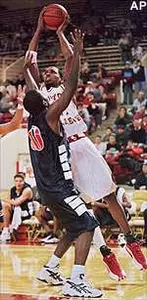
Kenny Walls: All The Right Moves
December 08, 2000 | Men's Basketball
For Kenny Walls, life at Boston College is pretty good. Actually, it's much more than pretty good. The San Francisco native couldn't be much happier. Think about it. The junior guard/forward is a very productive member of the basketball team. More importantly, he's receiving a great education from one of the nation's most prestigious universities. And, he's having the time of his life with his twin brother, Lenny, joining him in Chestnut Hill. But how, you might ask, did Walls make the decision to leave the West Coast and come across the country to Boston College? The answer requires some explanation and some knowledge of Walls' background. Suffice it to say, though, he knows he made the right choice. "Once I got here, I felt like I was home," Walls said. "Once I started playing basketball, going to classes and meeting professors, it all fell into place. The students welcomed me with open arms and before long it was like I was home again."
NOT HIS FIRST TIME AWAY
For Walls, the trip to the Boston area was not his first venture out of the Bay Area. Born and raised in San Francisco, Walls -- along with his twin brother -- moved clear across the country at age 8. For their own good, Kenny and Lenny were sent by their mother to live with their grandmother in Rison, Arkansas. When the two left San Francisco, the intention was for them to spend a couple of weeks visiting their late father's relatives. Their father died of a heart attack at age 38, when Kenny was only 5. Yet, the two-week vacation turned into almost seven years. While the twins were in Arkansas, their mother, Augustine Walls, made a monumental decision. She decided it was in her sons' best interest to stay in Arkansas. Family and friends there, she reasoned, would make her sons comfortable. San Francisco, she feared, especially the Fillmore district where they resided, might present some serious hazards. "We grew up in the projects on the west side of San Francisco," Kenny said, remembering his family's second-floor apartment in a three-story complex. "My brother and I used to get in lots of fights with people who lived in different projects. There were lots of drugs and lots of gun shots every night." Maybe hesitant to separate herself from her sons, Mrs. Walls nevertheless made the choice. It was what was best for them that was important. Her sons' lives would be better, she believed, if they grew up under their grandmother's tutelage in Arkansas. "It was huge," Kenny said of his mother's decision. "'Is it the best for us?' was the question she asked. The decision was so critical. She didn't look at it in a selfish way. She was looking out for our future. That's why I really admire and respect her for that."
LOOKING BACK
As Kenny reflected on his San Francisco home and what "might have been" had he not moved to Arkansas, he left little doubt that the correct choice had been made. "All my friends at home, they weren't like the best kids. They weren't disciplined," Walls said. "Their parents really didn't care about them. They were also living in projects, some parents doing drugs, some parents selling drugs. They did what they wanted to do. They didn't really get the education and discipline that I did when I was in Arkansas." In Arkansas, Kenny and Lenny saw a different way of life. The setting was different -- much different. Rather than living in an apartment "with the city right outside the door", Kenny recalled, he awoke to woods and yards. "There's lots of stuff you can do in the country that you can't do in the city. I would go fishing and hunting," he said. "The city -- it's just so crowded. For a little kid, it's real dangerous." But, more importantly, a potentially difficult transition was made much smoother by the love and caring of his relatives. "It was a huge transition. I don't know why, but it was like a new home. We felt comfortable living down there. There was so much family," he said, referring to his grandmother, aunts, uncles and cousins. "So we had enough support. It was so much fun." Kenny and his brother were constantly on the move. When Kenny arrived in Arkansas his aunt immediately got him involved in pee wee football. He also received the discipline his mother had hoped he'd receive. He cited his grandmother -- Birtie Lee Brandon -- for "putting us on the right path" and for guiding he and his brother in their new world. He mentioned her deep religious convictions, and noted her involvement -- and thus his as well -- with the church. Kenny also remembered the frequent calls -- usually every other day -- he received from his mother. Her support from afar was important as well.
BACK HOME
At age 15, Kenny and his brother were pretty well settled in Arkansas, "The Natural State". Both had set their sights on their high school graduation -- from Rison High School. Both had grown close to their extended family, and both had made many friendships in the area. Yet, their mother had another idea. She thought it best for her sons to return home to San Francisco. This idea, however, was greeted with initial skepticism by Kenny and Lenny. "We wanted to stay. Everything was great -- in school and in sports," Kenny said, noting he was poised to be Rison's starting quarterback on the football team and guard on the basketball team. "I was real sad when I left. There was so much family down there. I missed them as soon as I left." But Kenny gave the idea some additional thought. Why, he wondered, would his mother want this? "My brother and I thought about it and we thought 'Our mother's always good with making decisions. Maybe she knows something. She always knows what's best for us, so let's go back and see what happens,'" he said. So, after living nearly half his life in Arkansas, Kenny packed his bags and returned home. He'd visited San Francisco for parts of three summers during his time away, so he'd maintained some of his ties. Still, he remembered there was an initial shock upon his return. "It was a different way of life. The city was outside my door. I met new friends," he said. "After football and basketball practices, I'd hang with them, go to the movies, go to the mall and talk to girls." But Kenny quickly came to understand his mother's reasoning. He came to realize her thought process. "My mother thought that at age 15 we were ready. She thought my grandmother had done a good job raising us to be nice young men," Kenny said, referring to his brother and himself. "My mother felt we were ready to come back and live in the city and handle it. She knew we were more mature and knew right from wrong." Indeed, his grandmother had taught he and his brother well. "My grandmother is very traditional. She didn't let us go out," he said. "We didn't have some of the freedom we had with my mother. "When we got back to San Francisco, we'd learned a lot. Just having manners. We knew when we meet people to stand up and shake their hands -- the little stuff a lot of kids don't really get taught. And the religious part played a big role in my life. My grandmother raised us going to church a lot. She told us to pray and to turn to God."
THE RIGHT CHOICES
Whatever the formula, Mrs. Augustine Walls' decisions were wise. Her choices were correct. Indeed, Kenny -- and Lenny -- have turned out fine. Now both are integral parts of the Boston College community. Both have made names for themselves in their respective sports, but both have also earned stellar reputations as warm, smiling and equally gregarious individuals. Kenny is well known for his energy and enthusiasm. Where and from whom did those traits come -- from his mother and his San Francisco home or from his grandmother and extended family in Arkansas? "I don't know where that comes from. I guess that's just me," he answered. "That's what makes me so unique, what makes me different from everybody else. I just think it's a gift from God."