Boston College Athletics
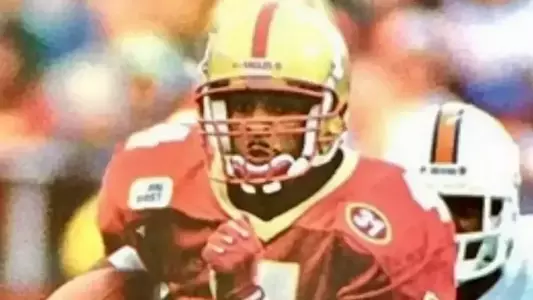
Throwback Thursday: Cincinnati, 1996
September 02, 2026 | Football, #ForBoston Files
BC's transition to the bowl-ready team of the late-1990s began with a key win in Ohio.
The Boston College football team represented a program in transition during its first months of the 1996 season. Head coach Tom Coughlin was in his second full season as head coach of the NFL's expansion program in Jacksonville, and major players and legends left the program after the 1993 and 1994 seasons. The 1995 year under Dan Henning forced the Eagles into rugged non-conference games against Ohio State and Michigan while an annual matchup against Notre Dame finally produced a victory for a Fighting Irish team that was nowhere near its national championship pedigree.
The growing pains understandably required BC to play some of its younger players, so the team with two wins in its first five games looked considerably different on either end of a spectrum that led directly to a game against a Cincinnati team with an identical 2-3 record. On one hand, it would've been difficult to imagine a bowl invitation unless something drastically changed. On the other hand, building towards the future began with the trip to Nippert Stadium to face a team newly installed as part of Conference-USA.
"If your record is 2-3, do you think of yourself as a 2-3 team, or do you say, 'Hey, we lost three games to teams in the Top 20 and those teams only have two losses between them?" asked Henning rhetorically ahead of the game against the Bearcats. "You've got to keep feeding the players the thought process that yes, we lost games but those were outstanding teams."
College football was an extremely different landscape when BC invaded Ohio for its first matchup against Cincinnati since the post-Doug Flutie era. Conference USA was in its infancy after merging the Metro Conference and the Great Midwest Conference in 1995, and the football conference that began play in 1996 held six pieces that were recognized as greater basketball powers. Houston's arrival from the collapsing Southwest Conference added a flair of tradition to a league that otherwise included Division I-A football independents orphaned by the reorganization of regionally-based leagues. Of those, only Louisville and Cincinnati had finished above .500, and none advanced to one of the 18 postseason bowl games.
The Eagles, meanwhile, were an emerging powerhouse in the early days of the Big East before Coughlin's departure left the team to transition through an era dominated by Virginia Tech, Syracuse and Miami. West Virginia filled the middle tier with the Eagles while the Hokies, Orangemen and Hurricanes battled for the league's championship crown, and Pittsburgh's occasional ability to remain ahead of Rutgers and Temple stationed the Panthers for the occasional run at that next level.
In short, BC's growing national brand exploded back into the sport's lexicon after the 1993 season, and 1994 kept them in a conversation that included elite non-conference games. An Aloha Bowl win over No. 11 Kansas State ended the '94 campaign with the team occupying one of the Big East's two national poll spots, but increased competition from Ohio State, Michigan and Michigan State sent the team into an 4-8 season despite a roster recruited through the newfound exposure.
"We're not a Top 20 team," admitted Henning to The Boston Globe ahead of the Cincinnati game in 1996. "We're not even a Top 25 team. The pollsters don't have us up there. So what makes us better? We generally play and have played in the last few years - very difficult schedules early on. So if you can come out of those games without being banged up too bad, generally you're going to be better because of the competition."
Enter Cincinnati, which was favored to finish near or at the top of the newly-minted Conference USA. The Bearcats were one of two teams - the other being BC - to defeat Virginia Tech in 1995, and stark similarities in total offense, time of possession and forced turnovers allowed coaches and players to easily size the two teams on an even playing field. Each possessed noteworthy victories when resumes were pitted against one another, and each sustained disappointing losses that caused their October matchup to represent a "get-right" game for their respective futures.
The first half, indeed, represented the evenly-spaced affair, and BC was able to overcome a 10-6 halftime deficit to earn a 24-17 victory. Quarterback Matt Hasselbeck, in particular, underwent a maturation process after he endured constant harassment by the stingy Bearcat defense, and he finished with 204 yards passing and a go-ahead touchdown in the third quarter. Kenyatta Watson - now the general manager of BC's football program - was singularly responsible for the bulk of those yards by grabbing six of Hasselbeck's 11 completions for 159 yards and that 19-yard score.
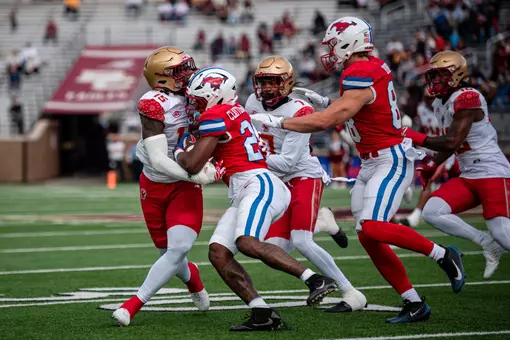
Omari Walker, meanwhile, went for 121 yards on 30 carries while Mike Cloud gained an additional 44 yards on 11 carries. Both teams finished with 400 yards of total offense, but 13 penalties sunk Cincinnati's time of possession advantage and tilted the field ever so slightly to the Eagles advantage.
"For us, this was kind of the turning point of our season," said Hasselbeck in his postgame remarks. "We knew we had to turn things around [in this game], and we knew we needed a win. And that's what we came here to do."
Even if BC's record didn't even out until an eight-win season in 1999, that game helped plant seeds that blossomed once Tom O'Brien took over as head coach in 1997. In particular, an offensive line that was significantly better in the next season gelled while Walker and Cloud gradually moved into a timeshare. By 1998, Cloud was the undisputed growth back with 1,700 yards, and he bridged to Cedric Washington and William Green before the decade ended.
The practice of settling on a quarterback, meanwhile, rotated Hasselbeck through the next two years until Scott Mutryn assumed full-time starter status in 1998. Tim Hasselbeck, meanwhile, served as Mutryn's understudy before assuming a similar role to Brian St. Pierre at the end of the decade.
None of it was linear, but the development that began with the win in Cincinnati eventually drew an endpoint in BC's fabled bowl appearance streak. The transition that began out of the Glenn Foley era eventually grew legs after the Henning-O'Brien era fostered its growth. Not dissimilar to the current transition, this year's Cincinnati game is like its predecessor from three decades ago in that a "young" team - one that hasn't played much football together - has an opportunity to gel its reputation while planting further seeds for the program's rebirth and growth.
"It feels like just yesterday when I came [to BC]," said quarterback Mason McKenzie. "It was January when I was in the portal, and now it's come fast, and it's exciting. It was a long six months of getting ready and getting prepared, but I think we're ready to go."
BC and Cincinnati kick off on Saturday with a 3:30 p.m. game from Nippert Stadium in Cincinnati, Ohio. National television coverage is slotted for Fox.
The growing pains understandably required BC to play some of its younger players, so the team with two wins in its first five games looked considerably different on either end of a spectrum that led directly to a game against a Cincinnati team with an identical 2-3 record. On one hand, it would've been difficult to imagine a bowl invitation unless something drastically changed. On the other hand, building towards the future began with the trip to Nippert Stadium to face a team newly installed as part of Conference-USA.
"If your record is 2-3, do you think of yourself as a 2-3 team, or do you say, 'Hey, we lost three games to teams in the Top 20 and those teams only have two losses between them?" asked Henning rhetorically ahead of the game against the Bearcats. "You've got to keep feeding the players the thought process that yes, we lost games but those were outstanding teams."
College football was an extremely different landscape when BC invaded Ohio for its first matchup against Cincinnati since the post-Doug Flutie era. Conference USA was in its infancy after merging the Metro Conference and the Great Midwest Conference in 1995, and the football conference that began play in 1996 held six pieces that were recognized as greater basketball powers. Houston's arrival from the collapsing Southwest Conference added a flair of tradition to a league that otherwise included Division I-A football independents orphaned by the reorganization of regionally-based leagues. Of those, only Louisville and Cincinnati had finished above .500, and none advanced to one of the 18 postseason bowl games.
The Eagles, meanwhile, were an emerging powerhouse in the early days of the Big East before Coughlin's departure left the team to transition through an era dominated by Virginia Tech, Syracuse and Miami. West Virginia filled the middle tier with the Eagles while the Hokies, Orangemen and Hurricanes battled for the league's championship crown, and Pittsburgh's occasional ability to remain ahead of Rutgers and Temple stationed the Panthers for the occasional run at that next level.
In short, BC's growing national brand exploded back into the sport's lexicon after the 1993 season, and 1994 kept them in a conversation that included elite non-conference games. An Aloha Bowl win over No. 11 Kansas State ended the '94 campaign with the team occupying one of the Big East's two national poll spots, but increased competition from Ohio State, Michigan and Michigan State sent the team into an 4-8 season despite a roster recruited through the newfound exposure.
"We're not a Top 20 team," admitted Henning to The Boston Globe ahead of the Cincinnati game in 1996. "We're not even a Top 25 team. The pollsters don't have us up there. So what makes us better? We generally play and have played in the last few years - very difficult schedules early on. So if you can come out of those games without being banged up too bad, generally you're going to be better because of the competition."
Enter Cincinnati, which was favored to finish near or at the top of the newly-minted Conference USA. The Bearcats were one of two teams - the other being BC - to defeat Virginia Tech in 1995, and stark similarities in total offense, time of possession and forced turnovers allowed coaches and players to easily size the two teams on an even playing field. Each possessed noteworthy victories when resumes were pitted against one another, and each sustained disappointing losses that caused their October matchup to represent a "get-right" game for their respective futures.
The first half, indeed, represented the evenly-spaced affair, and BC was able to overcome a 10-6 halftime deficit to earn a 24-17 victory. Quarterback Matt Hasselbeck, in particular, underwent a maturation process after he endured constant harassment by the stingy Bearcat defense, and he finished with 204 yards passing and a go-ahead touchdown in the third quarter. Kenyatta Watson - now the general manager of BC's football program - was singularly responsible for the bulk of those yards by grabbing six of Hasselbeck's 11 completions for 159 yards and that 19-yard score.
Omari Walker, meanwhile, went for 121 yards on 30 carries while Mike Cloud gained an additional 44 yards on 11 carries. Both teams finished with 400 yards of total offense, but 13 penalties sunk Cincinnati's time of possession advantage and tilted the field ever so slightly to the Eagles advantage.
"For us, this was kind of the turning point of our season," said Hasselbeck in his postgame remarks. "We knew we had to turn things around [in this game], and we knew we needed a win. And that's what we came here to do."
Even if BC's record didn't even out until an eight-win season in 1999, that game helped plant seeds that blossomed once Tom O'Brien took over as head coach in 1997. In particular, an offensive line that was significantly better in the next season gelled while Walker and Cloud gradually moved into a timeshare. By 1998, Cloud was the undisputed growth back with 1,700 yards, and he bridged to Cedric Washington and William Green before the decade ended.
The practice of settling on a quarterback, meanwhile, rotated Hasselbeck through the next two years until Scott Mutryn assumed full-time starter status in 1998. Tim Hasselbeck, meanwhile, served as Mutryn's understudy before assuming a similar role to Brian St. Pierre at the end of the decade.
None of it was linear, but the development that began with the win in Cincinnati eventually drew an endpoint in BC's fabled bowl appearance streak. The transition that began out of the Glenn Foley era eventually grew legs after the Henning-O'Brien era fostered its growth. Not dissimilar to the current transition, this year's Cincinnati game is like its predecessor from three decades ago in that a "young" team - one that hasn't played much football together - has an opportunity to gel its reputation while planting further seeds for the program's rebirth and growth.
"It feels like just yesterday when I came [to BC]," said quarterback Mason McKenzie. "It was January when I was in the portal, and now it's come fast, and it's exciting. It was a long six months of getting ready and getting prepared, but I think we're ready to go."
BC and Cincinnati kick off on Saturday with a 3:30 p.m. game from Nippert Stadium in Cincinnati, Ohio. National television coverage is slotted for Fox.
Players Mentioned

QB
/ FootballTuesday, October 13
Tuesday, October 13
Tuesday, October 13
Wednesday, October 07