Boston College Athletics
Wednesday, May 19
Annapolis, MD
TBA

Boston College
vs

ICSA Women's National Championships
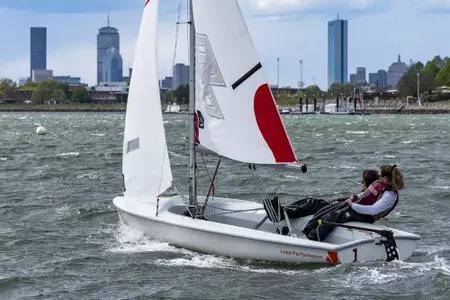
Photo by: Alastair Ingram
Battle-Tested BC Heads To Nationals
May 17, 2021 | Sailing, #ForBoston Files
The Eagles have persevered through everything thrown at them.
Greg Wilkinson felt like anything other than a college sailing head coach at times this year. At any given moment, he was an amateur epidemiologist and contact tracer for COVID-19 or a logistics and operations manager for his team's abbreviated schedule. He helped build the return to play handbook for the New England Intercollegiate Sailing Association, and that converted him into a colleague of doctors and trainers.
It wasn't until his team got into boats and sailed on the water that he settled into his normal role as Boston College's head coach, but even then it looked like something altogether different than normal. Such was life for the Eagles' pandemic-impacted season, but as the shortened schedule came to a close, it did nothing to diminish the impact of a year spent fighting.
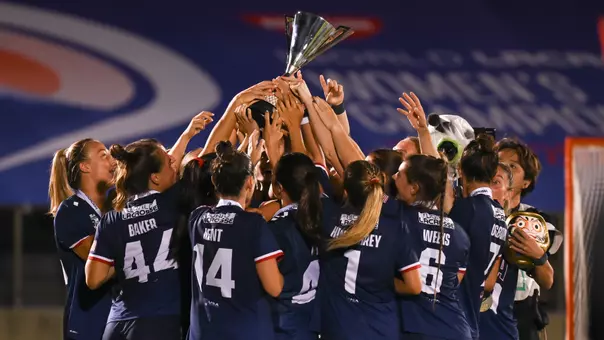
This week, the enthusiasm and perseverance that led BC into a season unlike any other begins its final chapter as the team competes for a national championship.
"The biggest challenge for this entire year was building that cohesive team," Wilkinson said. "It was so difficult to form that team (atmosphere), but as the weather broke and outside (practices) became easier to do, we started making progress. It felt like October in late April because the overall hours made it (that way). But this group has done a good job in the March and April time period of coming together as a team."
"When we left last March, I had this sinking feeling that I was never going to see Boston College ever again," said women's senior captain Elizabeth Russell. "To be back here and have another chance to do it is really exciting and special. The Class of 2020 kept in touch with the team over the summer and kept a mindset that they would help us win one this year, and the freshmen class has had a really tough year because it's probably been the worst year anyone could have been a freshman. That made this year mean more personally because we didn't believe we would get back here. So now I really want to seize the day and get it done for all of them."
In any other year, the national championship regatta is the capstone event for a season that begins in September. New England programs are especially beholden to the weather in a volatile fall and winter, but a regular season starts in the late summer sunshine and carries teams through the dipping mercury around Halloween before winter's icy cold shutters the season. It resumes in March with a three-month spring portion culminating in the national championships around late May and early June.
The COVID-19 pandemic prevented that from ever occurring in both this year and last year. In 2019-20, BC's Sophia Reineke captured the Women's Singlehanded National Championship in early November and finished second at the NEISA Women's Singlehanded Championships. It was part of a fall that featured a team championship at the Norman Reid Team Race in October and a second place finish at the Callagy Ross Trophy regatta. The men captured a second place finish behind then-senior Scott Rasmussen at the NEISA Men's Singlehanded Championships and the team finished third overall at the Nicholas Barnett Trophy hosted by Bowdoin College.
The foundation for winter training flowed naturally into the spring, and a team win in the Eckerd Regatta preceded a third place finish at the John Jackson Team Race in early March. The Eagles finished fifth at the Rudkin Team Race that same weekend, but the impending pandemic outbreak canceled every college sport within one week. By the next weekend, the sterling season and its potential was gone until college sailing returned to competition this past March.
The shortened schedule introduced a host of changes for both BC and any other program competing in the sport. The number of regattas shrunk in the absence of multiple-competition weekends, and the team's normal spring break trip and its additional team building component didn't occur.
The Eagles instead traveled to St. Mary's College of Maryland across two weekends, but the time lost was inherently dangerous to the team's performance. They couldn't train as a full unit and contoured their communications and practice to the new COVID protocols. Two athletes still raced in each boat with interchangeable personnel, but the natural hurdles on the shortened timeline only added to the degree of difficulty.
"COVID restrictions really impacted our logistics," Wilkinson said. "I don't think COVID limited us too much on the water, but smaller events were all on one day, which was different. We still had two people in a boat, but championships were limited to smaller rosters.
"We couldn't have a full squad every day (in practice)," he explained, "so in the past, we would be conservative about picking days in the early spring (to get on the water). This year, we didn't have that luxury, so there were days when wind was blowing 30 miles per hour or was really cold. We would go and at least attempt to practice but find that conditions weren't safe. But there were also days when we would get an extra hour where we would have sat days out."
The sense of urgency baked itself into the team's development at a time when it would expect to be at full stride. Athletes who usually are at full strength into nationals are instead continuing to develop early season strength and stamina. Full weekend regattas are instead built into single days, and preparations intended to slowly move a team from practice to competition are now switched on and off like a living room light, all of which battle-hardened a team one breath away from contact tracing its only coach out of any given lineup or day.
"We took new avenues to be together," said men's junior captain Declan McGranahan. "We used to do things in the past where we'd all get together before a regatta to get ready for it, and we obviously couldn't do that this year. So we really turned to virtual meetings, and we used Zoom as our tool to bring the team together. We tackled different areas, like diversity, and brought the team together by focusing on things that we usually wouldn't do in the past. Having that virtual area helped us."
It combined with the gratitude of simply being able to sail to produce immediate results. BC's top team went undefeated one day after finishing second at St. Mary's in the first weekend and chased a third place finish with another team race win in the second trip. It swept the team regatta at Connecticut College to round out March before opening April with a third and fourth place finish.
The Eagles sped into the NEISA Championships at Coast Guard and qualified for the national championships over the next two weeks by placing third in the women's championship and fifth in the coed discipline. One week later, the team posted an 8-4 record behind only Roger Williams University to qualify for the Team Race Nationals held next weekend.
"We're still trying to develop," Wilkinson said. "We're going to the women's races this week, but the team race starts on June 2, and we're not just training to maintain now. We're still developing and progressing. That's very different than the way it normally is for us. We're still getting out there for training before we switch gears for the women's group to get ready to travel for their event."
"There were some limits to a point because we didn't have the ability to compete against some of the other schools," said McGranahan, "but we had an opportunity to really come together as a family and push each other in practice. These past couple of weeks, after we finished our qualifiers, everybody just seemed excited to get ready for nationals. The vibe is that we will excel and move forward. We haven't really had an opportunity to showcase our skills against these other teams, and everyone's excited to just show them what we have at BC."
"We have a super young women's team," said Russell, "but that's been fun because it's very fresh. Nobody's been through this before, and even though this is my fourth year, it feels fresh. We're all going through it for the first time together because it's been two years since we competed at spring nationals. It's made for a bonding experience in that way. There's so much potential getting to know this team and guiding the new people through their first year. They're going to go far in the next three years."
The ICSA Women's National Championships kick off on Wednesday (May 19) and continue through Thursday (May 20) at the Naval Academy in Annapolis, Maryland before the ICSA Team Race National Championships take place on June 2-3. The Coed National Championships round out the three-week affair on June 7 and June 8.
It wasn't until his team got into boats and sailed on the water that he settled into his normal role as Boston College's head coach, but even then it looked like something altogether different than normal. Such was life for the Eagles' pandemic-impacted season, but as the shortened schedule came to a close, it did nothing to diminish the impact of a year spent fighting.
This week, the enthusiasm and perseverance that led BC into a season unlike any other begins its final chapter as the team competes for a national championship.
"The biggest challenge for this entire year was building that cohesive team," Wilkinson said. "It was so difficult to form that team (atmosphere), but as the weather broke and outside (practices) became easier to do, we started making progress. It felt like October in late April because the overall hours made it (that way). But this group has done a good job in the March and April time period of coming together as a team."
"When we left last March, I had this sinking feeling that I was never going to see Boston College ever again," said women's senior captain Elizabeth Russell. "To be back here and have another chance to do it is really exciting and special. The Class of 2020 kept in touch with the team over the summer and kept a mindset that they would help us win one this year, and the freshmen class has had a really tough year because it's probably been the worst year anyone could have been a freshman. That made this year mean more personally because we didn't believe we would get back here. So now I really want to seize the day and get it done for all of them."
In any other year, the national championship regatta is the capstone event for a season that begins in September. New England programs are especially beholden to the weather in a volatile fall and winter, but a regular season starts in the late summer sunshine and carries teams through the dipping mercury around Halloween before winter's icy cold shutters the season. It resumes in March with a three-month spring portion culminating in the national championships around late May and early June.
The COVID-19 pandemic prevented that from ever occurring in both this year and last year. In 2019-20, BC's Sophia Reineke captured the Women's Singlehanded National Championship in early November and finished second at the NEISA Women's Singlehanded Championships. It was part of a fall that featured a team championship at the Norman Reid Team Race in October and a second place finish at the Callagy Ross Trophy regatta. The men captured a second place finish behind then-senior Scott Rasmussen at the NEISA Men's Singlehanded Championships and the team finished third overall at the Nicholas Barnett Trophy hosted by Bowdoin College.
The foundation for winter training flowed naturally into the spring, and a team win in the Eckerd Regatta preceded a third place finish at the John Jackson Team Race in early March. The Eagles finished fifth at the Rudkin Team Race that same weekend, but the impending pandemic outbreak canceled every college sport within one week. By the next weekend, the sterling season and its potential was gone until college sailing returned to competition this past March.
The shortened schedule introduced a host of changes for both BC and any other program competing in the sport. The number of regattas shrunk in the absence of multiple-competition weekends, and the team's normal spring break trip and its additional team building component didn't occur.
The Eagles instead traveled to St. Mary's College of Maryland across two weekends, but the time lost was inherently dangerous to the team's performance. They couldn't train as a full unit and contoured their communications and practice to the new COVID protocols. Two athletes still raced in each boat with interchangeable personnel, but the natural hurdles on the shortened timeline only added to the degree of difficulty.
"COVID restrictions really impacted our logistics," Wilkinson said. "I don't think COVID limited us too much on the water, but smaller events were all on one day, which was different. We still had two people in a boat, but championships were limited to smaller rosters.
"We couldn't have a full squad every day (in practice)," he explained, "so in the past, we would be conservative about picking days in the early spring (to get on the water). This year, we didn't have that luxury, so there were days when wind was blowing 30 miles per hour or was really cold. We would go and at least attempt to practice but find that conditions weren't safe. But there were also days when we would get an extra hour where we would have sat days out."
The sense of urgency baked itself into the team's development at a time when it would expect to be at full stride. Athletes who usually are at full strength into nationals are instead continuing to develop early season strength and stamina. Full weekend regattas are instead built into single days, and preparations intended to slowly move a team from practice to competition are now switched on and off like a living room light, all of which battle-hardened a team one breath away from contact tracing its only coach out of any given lineup or day.
"We took new avenues to be together," said men's junior captain Declan McGranahan. "We used to do things in the past where we'd all get together before a regatta to get ready for it, and we obviously couldn't do that this year. So we really turned to virtual meetings, and we used Zoom as our tool to bring the team together. We tackled different areas, like diversity, and brought the team together by focusing on things that we usually wouldn't do in the past. Having that virtual area helped us."
It combined with the gratitude of simply being able to sail to produce immediate results. BC's top team went undefeated one day after finishing second at St. Mary's in the first weekend and chased a third place finish with another team race win in the second trip. It swept the team regatta at Connecticut College to round out March before opening April with a third and fourth place finish.
The Eagles sped into the NEISA Championships at Coast Guard and qualified for the national championships over the next two weeks by placing third in the women's championship and fifth in the coed discipline. One week later, the team posted an 8-4 record behind only Roger Williams University to qualify for the Team Race Nationals held next weekend.
"We're still trying to develop," Wilkinson said. "We're going to the women's races this week, but the team race starts on June 2, and we're not just training to maintain now. We're still developing and progressing. That's very different than the way it normally is for us. We're still getting out there for training before we switch gears for the women's group to get ready to travel for their event."
"There were some limits to a point because we didn't have the ability to compete against some of the other schools," said McGranahan, "but we had an opportunity to really come together as a family and push each other in practice. These past couple of weeks, after we finished our qualifiers, everybody just seemed excited to get ready for nationals. The vibe is that we will excel and move forward. We haven't really had an opportunity to showcase our skills against these other teams, and everyone's excited to just show them what we have at BC."
"We have a super young women's team," said Russell, "but that's been fun because it's very fresh. Nobody's been through this before, and even though this is my fourth year, it feels fresh. We're all going through it for the first time together because it's been two years since we competed at spring nationals. It's made for a bonding experience in that way. There's so much potential getting to know this team and guiding the new people through their first year. They're going to go far in the next three years."
The ICSA Women's National Championships kick off on Wednesday (May 19) and continue through Thursday (May 20) at the Naval Academy in Annapolis, Maryland before the ICSA Team Race National Championships take place on June 2-3. The Coed National Championships round out the three-week affair on June 7 and June 8.

Players Mentioned
Crew
/ Sailing
Skipper
/ Sailing
Skipper
/ Sailing
Crew
/ SailingMonday, October 05
Saturday, October 03
Saturday, October 03
Thursday, October 01