Boston College Athletics
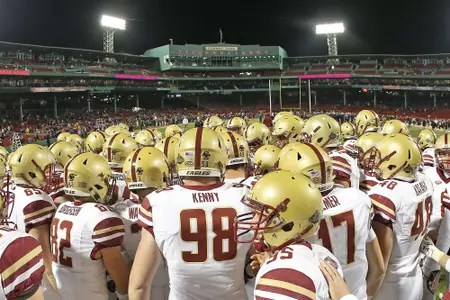
Photo by: John Quackenbos
Eagles UNLTD Mailbag: April 13, 2020
April 13, 2020 | Football, #ForBoston Files
The ACC has a new bowl lineup. What should you know about it?
Welcome to our next installment of the Eagles UNLTD Mailbag. I'll be answering questions related to Boston College athletics and providing in-depth analysis into everything related to the Eagles. If you'd like to submit a question, feel free to email athcomm@bc.edu!
I know the new ACC bowl contracts start this year. Can you talk more about the specifics of how the selection process will work? What is the order of selection among the bowls? -Mark F.
I loved this email. Mark brought up a great point about the new ACC bowl contract, specifically mentioning how everything is changing this year. He provided me with the link to the ACC's announcement from last July, and I urge people to read it so they can learn about the new bowl structure and how it will play out between now and 2025.
I want to try to explain it out for everyone, so let's rewind to the previous selection criteria in order to fully understand what we knew. The ACC previously split approximately 10 bowls into different tiers based upon the final records of its teams both during the season and in the College Football Playoff rankings. The league champion received an automatic bid to the New Year's Six games, more specifically the Orange Bowl in years when the game was not used for a semifinal.
The ACC champion, though, has been a semifinalist team since the NCAA introduced the College Football Playoff. That forced the CFP committee to assign the next-highest ACC team to the Orange Bowl, regardless of ranking. That's why Virginia went to the game last year as the No. 24 team in the polls.
The New Year's Six set the tone for every other bowl game, and leagues worked with games to assign teams based primarily upon finishing order within the conference. The Camping World Bowl received the next highest-seeded team available, with the remaining top four teams slotting into the Belk Bowl, the Pinstripe Bowl, the Sun Bowl and either the Music City Bowl or the Gator Bowl. This "Tier One" created options based upon the involved conferences and television affiliates.
Three secondary games followed Tier One by choosing in successive order, with the Military Bowl, the Independence Bowl, and the Quick Lane Bowl preceding two "flex bowls." This is where BC fell last year when it went to the Birmingham Bowl, which the league considered as an "Additional Game" alongside the Gasparilla Bowl. It felt concrete, though the Citrus Bowl and Notre Dame threw the occasional wrinkle based upon other factors.
The new format still obliges the CFP to send an ACC team to the Orange Bowl as long as it isn't a semifinal game, but the rest of the structure is now slightly different. Most of the bowl games are the same, but the league's announcement is devoid of the tiered system, at least for now.
The "Tier One" games all return to the ACC's stable, though the league's affiliation with the Music City Bowl is now swapped for the Holiday Bowl in San Diego, California. There's also still an arrangement with the Big Ten, but it no longer involves the Citrus Bowl. Instead, the Outback Bowl, which is a Big Ten bowl, will be given to the ACC if the ACC plays the Big Ten in the Orange Bowl. This is the same arrangement the leagues previously had with the Citrus Bowl.
There's also a new bowl game created in conjunction with ESPN Events and Fenway Sports Management. That game - the appropriately-named Fenway Bowl - is to be played at Fenway Park. I'll come back to that in a little bit.
ESPN will further collaborate with three bowls on the selection of one ACC team. Those three games now officially include the SERVPRO First Responder Bowl and the Birmingham Bowl, BC's last two destinations, along with the Gasparilla Bowl holdover.
Of those, the First Responder Bowl is completely new to the ACC's formal lineup, and it cycles out the Independence Bowl, which is now affiliated with both Army and Brigham Young, and the Quick Lane Bowl, which shifts to the Mid-American Conference.
That leads us back to the selection criteria. Mark's email to me pointed out a fantastically vague line in the ACC's announcement: "The ACC and its bowl partners will make team selections based on several factors, including geographic proximity, avoiding repeat performances and matchups, and regular season won-loss records."
The statement strips away the bowl game notion that one game is inherently better than another, and it instead places an emphasis on the league's geographic footprint and appeal. It opens the door for more thorough discussion where previous years essentially locked teams into games based upon finishing position. It's very similar to the Big Ten's model in that way.
There's no denying, though, how some games are considered more prestigious than others, so I don't think the bowl selection process is going to instantaneously convert into a free-for-all. I do think, however, that some games will become more appealing to some schools, and the rules change enables those schools to work with the conference to develop intriguing, competitive matchup.
I look specifically at Boston College and recent matchups where the Eagles didn't necessarily make sense for a couple of different matchups, In 2018, BC appeared bound for either the Orange Bowl or the Camping World Bowl when it lost its last three games. By rule, Syracuse drew the Camping World Bowl matchup, while BC fell into a glut of teams for Tier One.
Pittsburgh was 7-6 overall but won the Coastal Division, so the Panthers couldn't drop below Tier One. NC State was 9-2 and easily clinched a Tier One spot, and Georgia Tech, despite being 7-5 overall, finished a game ahead of BC as the second place Coastal Division spot.
That left BC to compete with Miami and Virginia for one Tier One spot. Additionally, conference bowl scheduling rules prevented the Eagles from returning to the Pinstripe Bowl. Considering the perceived strength of the "Secondary Bowls," ESPN worked with BC to send the Eagles to the SERVPRO First Responder Bowl against a nationally-ranked Boise State team.
I believe that system is now going to be applied to the entire bowl system. I believe, personally, in the prestige of some games, especially when it comes to conference affiliation and matchup. But I also believe some teams are more likely to want to travel to other locations. I know the Pinstripe Bowl is an attractive landing spot for BC fans for a host of reasons, and the 2014 bowl game drew more than 49,000 fans to Yankee Stadium. I doubt the game can say the same for a team like Florida State, especially when there's an available game in Jacksonville or Tampa.
I don't know how the bowl selection process will play out, but I think breaking down the tiers makes it easier for the league to slot teams into better-suited positions. I'm especially excited for the Fenway Bowl (told you I'd come back to it) because it's literally in our backyard.
BC played at Fenway as a road team on two occasions, but I can't see a situation where a "neutral site" game at Fenway skews heavily against the Eagles. It's a lot like the Pinstripe Bowl in that regard, and the potential matchups against the American Athletic Conference draws thick lines against old eastern rivals like Navy or Cincinnati (which just played BC in the Birmingham Bowl), and Houston played BC in the Cotton Bowl when Doug Flutie won the Heisman Trophy.
The rotational aspect ensures BC won't play there every year, ensuring fans can travel to other locations, and the ACC, geographically, is very different than it was in 2007 when the league dropped the nine-win Eagles to the Continental Tire Bowl while Maryland played in the Champs Sports Bowl. I think setting up the new system with its new criteria ensures the Northeast, with BC, Syracuse, Pittsburgh and, to a lesser degree, Notre Dame is well represented, and I can't wait to see how it plays out over the next few years.
I know the new ACC bowl contracts start this year. Can you talk more about the specifics of how the selection process will work? What is the order of selection among the bowls? -Mark F.
I loved this email. Mark brought up a great point about the new ACC bowl contract, specifically mentioning how everything is changing this year. He provided me with the link to the ACC's announcement from last July, and I urge people to read it so they can learn about the new bowl structure and how it will play out between now and 2025.
I want to try to explain it out for everyone, so let's rewind to the previous selection criteria in order to fully understand what we knew. The ACC previously split approximately 10 bowls into different tiers based upon the final records of its teams both during the season and in the College Football Playoff rankings. The league champion received an automatic bid to the New Year's Six games, more specifically the Orange Bowl in years when the game was not used for a semifinal.
The ACC champion, though, has been a semifinalist team since the NCAA introduced the College Football Playoff. That forced the CFP committee to assign the next-highest ACC team to the Orange Bowl, regardless of ranking. That's why Virginia went to the game last year as the No. 24 team in the polls.
The New Year's Six set the tone for every other bowl game, and leagues worked with games to assign teams based primarily upon finishing order within the conference. The Camping World Bowl received the next highest-seeded team available, with the remaining top four teams slotting into the Belk Bowl, the Pinstripe Bowl, the Sun Bowl and either the Music City Bowl or the Gator Bowl. This "Tier One" created options based upon the involved conferences and television affiliates.
Three secondary games followed Tier One by choosing in successive order, with the Military Bowl, the Independence Bowl, and the Quick Lane Bowl preceding two "flex bowls." This is where BC fell last year when it went to the Birmingham Bowl, which the league considered as an "Additional Game" alongside the Gasparilla Bowl. It felt concrete, though the Citrus Bowl and Notre Dame threw the occasional wrinkle based upon other factors.
The new format still obliges the CFP to send an ACC team to the Orange Bowl as long as it isn't a semifinal game, but the rest of the structure is now slightly different. Most of the bowl games are the same, but the league's announcement is devoid of the tiered system, at least for now.
The "Tier One" games all return to the ACC's stable, though the league's affiliation with the Music City Bowl is now swapped for the Holiday Bowl in San Diego, California. There's also still an arrangement with the Big Ten, but it no longer involves the Citrus Bowl. Instead, the Outback Bowl, which is a Big Ten bowl, will be given to the ACC if the ACC plays the Big Ten in the Orange Bowl. This is the same arrangement the leagues previously had with the Citrus Bowl.
There's also a new bowl game created in conjunction with ESPN Events and Fenway Sports Management. That game - the appropriately-named Fenway Bowl - is to be played at Fenway Park. I'll come back to that in a little bit.
ESPN will further collaborate with three bowls on the selection of one ACC team. Those three games now officially include the SERVPRO First Responder Bowl and the Birmingham Bowl, BC's last two destinations, along with the Gasparilla Bowl holdover.
Of those, the First Responder Bowl is completely new to the ACC's formal lineup, and it cycles out the Independence Bowl, which is now affiliated with both Army and Brigham Young, and the Quick Lane Bowl, which shifts to the Mid-American Conference.
That leads us back to the selection criteria. Mark's email to me pointed out a fantastically vague line in the ACC's announcement: "The ACC and its bowl partners will make team selections based on several factors, including geographic proximity, avoiding repeat performances and matchups, and regular season won-loss records."
The statement strips away the bowl game notion that one game is inherently better than another, and it instead places an emphasis on the league's geographic footprint and appeal. It opens the door for more thorough discussion where previous years essentially locked teams into games based upon finishing position. It's very similar to the Big Ten's model in that way.
There's no denying, though, how some games are considered more prestigious than others, so I don't think the bowl selection process is going to instantaneously convert into a free-for-all. I do think, however, that some games will become more appealing to some schools, and the rules change enables those schools to work with the conference to develop intriguing, competitive matchup.
I look specifically at Boston College and recent matchups where the Eagles didn't necessarily make sense for a couple of different matchups, In 2018, BC appeared bound for either the Orange Bowl or the Camping World Bowl when it lost its last three games. By rule, Syracuse drew the Camping World Bowl matchup, while BC fell into a glut of teams for Tier One.
Pittsburgh was 7-6 overall but won the Coastal Division, so the Panthers couldn't drop below Tier One. NC State was 9-2 and easily clinched a Tier One spot, and Georgia Tech, despite being 7-5 overall, finished a game ahead of BC as the second place Coastal Division spot.
That left BC to compete with Miami and Virginia for one Tier One spot. Additionally, conference bowl scheduling rules prevented the Eagles from returning to the Pinstripe Bowl. Considering the perceived strength of the "Secondary Bowls," ESPN worked with BC to send the Eagles to the SERVPRO First Responder Bowl against a nationally-ranked Boise State team.
I believe that system is now going to be applied to the entire bowl system. I believe, personally, in the prestige of some games, especially when it comes to conference affiliation and matchup. But I also believe some teams are more likely to want to travel to other locations. I know the Pinstripe Bowl is an attractive landing spot for BC fans for a host of reasons, and the 2014 bowl game drew more than 49,000 fans to Yankee Stadium. I doubt the game can say the same for a team like Florida State, especially when there's an available game in Jacksonville or Tampa.
I don't know how the bowl selection process will play out, but I think breaking down the tiers makes it easier for the league to slot teams into better-suited positions. I'm especially excited for the Fenway Bowl (told you I'd come back to it) because it's literally in our backyard.
BC played at Fenway as a road team on two occasions, but I can't see a situation where a "neutral site" game at Fenway skews heavily against the Eagles. It's a lot like the Pinstripe Bowl in that regard, and the potential matchups against the American Athletic Conference draws thick lines against old eastern rivals like Navy or Cincinnati (which just played BC in the Birmingham Bowl), and Houston played BC in the Cotton Bowl when Doug Flutie won the Heisman Trophy.
The rotational aspect ensures BC won't play there every year, ensuring fans can travel to other locations, and the ACC, geographically, is very different than it was in 2007 when the league dropped the nine-win Eagles to the Continental Tire Bowl while Maryland played in the Champs Sports Bowl. I think setting up the new system with its new criteria ensures the Northeast, with BC, Syracuse, Pittsburgh and, to a lesser degree, Notre Dame is well represented, and I can't wait to see how it plays out over the next few years.

#23 Baseball Defeats Darmouth (April 8, 2026)
Thursday, April 09
Football: Bill O'Brien Media Availability (April 8, 2026)
Wednesday, April 08
Football: Johnathan Montague Jr. Media Availability (April 8, 2026)
Wednesday, April 08
Football: Israel Oladipupo Media Availability (April 8, 2026)
Wednesday, April 08