Boston College Athletics
Friday, January 11
Whiteface Mountain

Boston College
at

St. Lawrence Carnival
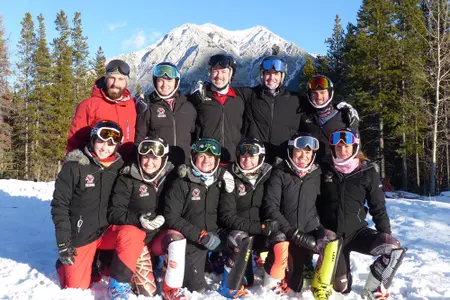
Ski Team Heads to Lake Placid to Kick Off 2019 Carnival Circuit
January 10, 2019 | Skiing, #ForBoston Files
New coach Craig Marshall leads the Eagles into ultra-competitive competition.
Craig Marshall wasn't really sure what to expect when he accepted the head coaching position for the Boston College ski team. He had extensive experience in the sport, having worked for the World Pro Ski Tour in Maine, and he helped launch the professional alpine tour in the United States. As a college skier, he was a two-time national qualifier before graduating from Colby College in 2015.
He was a still a first time college coach, though, so there was always going to be that little bit of adjustment. So he was pleasantly surprised when he got his first look at his Eagles.
"I've been very impressed by how professional this team is already," he said. "The culture of the team in general on and off the hill, you can be worried about the habits and general, overall routine. There's concern that it's not as effective as you hope, and it can be difficult to change. But the previous coaches did a really great job of creating an atmosphere that really lent itself to (solid) performance."
That attitude anchored the team through its adjustment period, and two months later, the Eagles are now ready to attack the slopes of the Northeast. This weekend, BC heads to Lake Placid, N.Y. and Whiteface Mountain as part of its first carnival competition of the season.
"It's super exciting," senior captain Amanda Steffey said. "We had a little bit of time on snow around Thanksgiving with a week of training, but after that, we came back to school and didn't train until January 1 with our annual camp. Right now, we have nothing besides our training, so we're getting in the zone and getting pumped up for our first race."
The Eagles are looking to build on a young roster that will defy its relative inexperience. Steffey is one of three seniors on the women's roster, while co-captain Aaron Taylor is the lone senior on the men's side. Seven team members across both genders are either freshmen or sophomores. But the team is still talented thanks to its background in high-level academy programs.
"The great thing is that these athletes come from (those) academy programs," Marshall said. "The academies now are preparing these kids at a very high level. Their routines are very similar to what the top athletes in the world are doing. That's really important because they (come to college with) really good habits, and they have a really good background in physical fitness training."
That training is paramount because time on the slopes is relatively limited. The Eagles had a week of training at Thanksgiving but otherwise are at the mercy of their schedule. Class schedules can conspire with a relatively mild winter to prevent college athletes from getting the adequate amount of time on a mountain. So the Eagles dedicated themselves in the weight room before finally getting out on the slopes at the start of this month.
"In college, you don't ski nearly as much because of classes and locations," Marshall said. "So physical fitness becomes so much more important. This program, with the strength and conditioning team and the former coaching staff, has a really good foundation. Then there are some things that, for me, I like to focus on. I'm huge on balance and stability, and all of the weight lifting and endurance training that we do. When I came on in November, the first couple of weeks before we started skiing, I let them execute the plan as they would if I hadn't even been there. I was very impressed with what I saw."
"Craig showed up and gave us a shot of new energy," Taylor said. "He got all of us on board to set the tone that it would be really serious to get to the next level. Every coach has a different approach, and there are little tiny things that everyone can do to get faster. Every coach has a different way, so there was a feeler period. But he's showed interest in every athlete, spending a lot of time with us on the hill. He's reviewed videos off the hill and dissected our strategy, one-on-one. He has some really great ideas to really ramp up our training to get us more exposure on tougher slopes and hills."
It sets the table for a grueling competitive schedule in one of the nation's elite conferences. The Eagles compete in the Eastern Collegiate Ski Association, which is built from schools with impressive traditions. Marshall competed in the league as part of Colby's roster, but it boasts the likes of Dartmouth, Vermont and Middlebury - schools with rich traditions and deep rosters.
"It's a huge challenge (in the EISA)," Marshall said. "There's a girl who skis for Vermont who is 24, and she has been skiing with the United States in the World Cup. She is coming back to race this weekend in the college races, and that's the level of athlete that is in this circuit. A lot of schools recruit internationally, and a lot of the athletes have experience around the world at a high level."
It starts this weekend at a venue that served as part of the 1980 Winter Olympics. The Lake Placid-based carnival is hosted by St. Lawrence and provides the first alpine chance for tangible times. It kicks off a six-carnival season between now and the end of February with competitions at local mainstays like Stowe Mountain and Sunday River. In addition, BC heads to Mittersill Alpine Resort next week and will later ski at both the on-campus sites at the Dartmouth Skiway and the Middlebury Snowbowl.
"Dartmouth and Middlebury are college ski areas, so they're much smaller than a place like Whiteface or Stowe or Sunday River," Marshall said. "Particularly at those places, they tend to be flatter hills. With that, you have to be full gas the whole way, 100%. Everybody is really dialed in and going as hard as they can, so if you don't bring that same level of intensity, it's easy to get absolutely smoked. But the nice thing is that I have a lot of experience on (those locations) and know what it will take to be successful."
"Every hill is different," Steffey said. "Every race is different. You have to look at the snow conditions and the hill conditions and create a gameplan for yourself. At the same time, a big part of skiing is training how you race. Every athlete can probably relate to that, but we have to put what we practice on the hill. We have to maintain that same energy and zone out the added pressure of competition to perform at our best."
It's hard competition, but it's also friendly. Schools have heated traditions against one another, but the ski community is very collaborative. Many of the athletes at the EISA carnivals spent their childhoods skiing with and against one another, so the competition becomes something of a skiing forum where athletes parrot training and experiences off of one another.
"We've been racing against a lot of these kids since we were little," Steffey said. "We have a lot of close friends across the circuit that we see at competitions. So it's fun to see familiar faces and catch up, but at the same time, it's helpful to learn from other teams and check in to see what they're doing with preparation and training. We all get to learn and collaborate because this is such a tight-knit sport, in general."
"It's awesome," Taylor said. "You're friends with a lot of these people, so you want them to do well. But you also want to beat them more because of that. There's that personal friendship and rivalry that always exists, and it's a great atmosphere. In addition, the NCAA circuit has grown so competitive. There are multiple racers from World Cups, who are Top-15 in those competitions in places like Austria. That shows the level that we're racing against, and they're truly some of the best in the world. It inspires everyone to strive to beat them and really just elevates the overall competition."
He was a still a first time college coach, though, so there was always going to be that little bit of adjustment. So he was pleasantly surprised when he got his first look at his Eagles.
"I've been very impressed by how professional this team is already," he said. "The culture of the team in general on and off the hill, you can be worried about the habits and general, overall routine. There's concern that it's not as effective as you hope, and it can be difficult to change. But the previous coaches did a really great job of creating an atmosphere that really lent itself to (solid) performance."
That attitude anchored the team through its adjustment period, and two months later, the Eagles are now ready to attack the slopes of the Northeast. This weekend, BC heads to Lake Placid, N.Y. and Whiteface Mountain as part of its first carnival competition of the season.
"It's super exciting," senior captain Amanda Steffey said. "We had a little bit of time on snow around Thanksgiving with a week of training, but after that, we came back to school and didn't train until January 1 with our annual camp. Right now, we have nothing besides our training, so we're getting in the zone and getting pumped up for our first race."
The Eagles are looking to build on a young roster that will defy its relative inexperience. Steffey is one of three seniors on the women's roster, while co-captain Aaron Taylor is the lone senior on the men's side. Seven team members across both genders are either freshmen or sophomores. But the team is still talented thanks to its background in high-level academy programs.
"The great thing is that these athletes come from (those) academy programs," Marshall said. "The academies now are preparing these kids at a very high level. Their routines are very similar to what the top athletes in the world are doing. That's really important because they (come to college with) really good habits, and they have a really good background in physical fitness training."
That training is paramount because time on the slopes is relatively limited. The Eagles had a week of training at Thanksgiving but otherwise are at the mercy of their schedule. Class schedules can conspire with a relatively mild winter to prevent college athletes from getting the adequate amount of time on a mountain. So the Eagles dedicated themselves in the weight room before finally getting out on the slopes at the start of this month.
"In college, you don't ski nearly as much because of classes and locations," Marshall said. "So physical fitness becomes so much more important. This program, with the strength and conditioning team and the former coaching staff, has a really good foundation. Then there are some things that, for me, I like to focus on. I'm huge on balance and stability, and all of the weight lifting and endurance training that we do. When I came on in November, the first couple of weeks before we started skiing, I let them execute the plan as they would if I hadn't even been there. I was very impressed with what I saw."
"Craig showed up and gave us a shot of new energy," Taylor said. "He got all of us on board to set the tone that it would be really serious to get to the next level. Every coach has a different approach, and there are little tiny things that everyone can do to get faster. Every coach has a different way, so there was a feeler period. But he's showed interest in every athlete, spending a lot of time with us on the hill. He's reviewed videos off the hill and dissected our strategy, one-on-one. He has some really great ideas to really ramp up our training to get us more exposure on tougher slopes and hills."
It sets the table for a grueling competitive schedule in one of the nation's elite conferences. The Eagles compete in the Eastern Collegiate Ski Association, which is built from schools with impressive traditions. Marshall competed in the league as part of Colby's roster, but it boasts the likes of Dartmouth, Vermont and Middlebury - schools with rich traditions and deep rosters.
"It's a huge challenge (in the EISA)," Marshall said. "There's a girl who skis for Vermont who is 24, and she has been skiing with the United States in the World Cup. She is coming back to race this weekend in the college races, and that's the level of athlete that is in this circuit. A lot of schools recruit internationally, and a lot of the athletes have experience around the world at a high level."
It starts this weekend at a venue that served as part of the 1980 Winter Olympics. The Lake Placid-based carnival is hosted by St. Lawrence and provides the first alpine chance for tangible times. It kicks off a six-carnival season between now and the end of February with competitions at local mainstays like Stowe Mountain and Sunday River. In addition, BC heads to Mittersill Alpine Resort next week and will later ski at both the on-campus sites at the Dartmouth Skiway and the Middlebury Snowbowl.
"Dartmouth and Middlebury are college ski areas, so they're much smaller than a place like Whiteface or Stowe or Sunday River," Marshall said. "Particularly at those places, they tend to be flatter hills. With that, you have to be full gas the whole way, 100%. Everybody is really dialed in and going as hard as they can, so if you don't bring that same level of intensity, it's easy to get absolutely smoked. But the nice thing is that I have a lot of experience on (those locations) and know what it will take to be successful."
"Every hill is different," Steffey said. "Every race is different. You have to look at the snow conditions and the hill conditions and create a gameplan for yourself. At the same time, a big part of skiing is training how you race. Every athlete can probably relate to that, but we have to put what we practice on the hill. We have to maintain that same energy and zone out the added pressure of competition to perform at our best."
It's hard competition, but it's also friendly. Schools have heated traditions against one another, but the ski community is very collaborative. Many of the athletes at the EISA carnivals spent their childhoods skiing with and against one another, so the competition becomes something of a skiing forum where athletes parrot training and experiences off of one another.
"We've been racing against a lot of these kids since we were little," Steffey said. "We have a lot of close friends across the circuit that we see at competitions. So it's fun to see familiar faces and catch up, but at the same time, it's helpful to learn from other teams and check in to see what they're doing with preparation and training. We all get to learn and collaborate because this is such a tight-knit sport, in general."
"It's awesome," Taylor said. "You're friends with a lot of these people, so you want them to do well. But you also want to beat them more because of that. There's that personal friendship and rivalry that always exists, and it's a great atmosphere. In addition, the NCAA circuit has grown so competitive. There are multiple racers from World Cups, who are Top-15 in those competitions in places like Austria. That shows the level that we're racing against, and they're truly some of the best in the world. It inspires everyone to strive to beat them and really just elevates the overall competition."

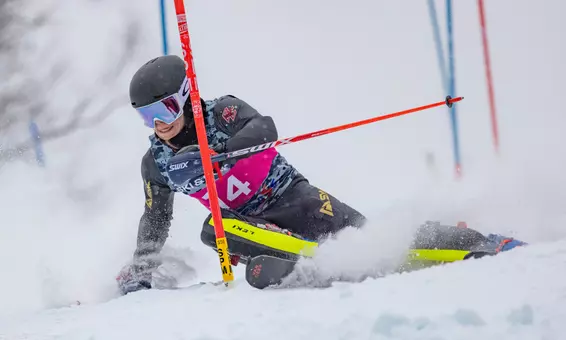
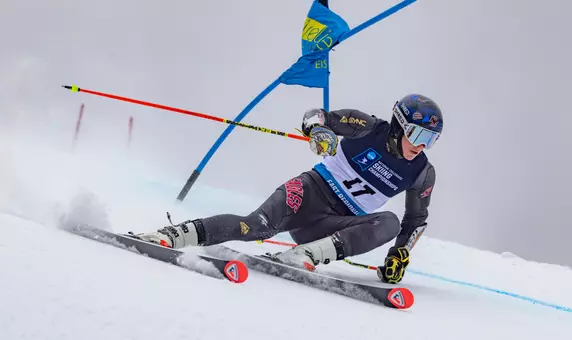
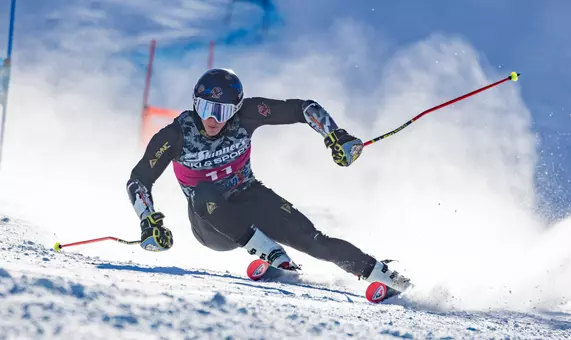

Players Mentioned

/ Skiing

/ Skiing
Football: Zeke Moore Media Availability (April 10, 2026)
Friday, April 10
Football: Bill O'Brien Media Availability (April 10, 2026)
Friday, April 10
Football: Favor Bate Media Availability (April 10, 2026)
Friday, April 10
#23 Baseball Defeats Darmouth (April 8, 2026)
Thursday, April 09