Boston College Athletics
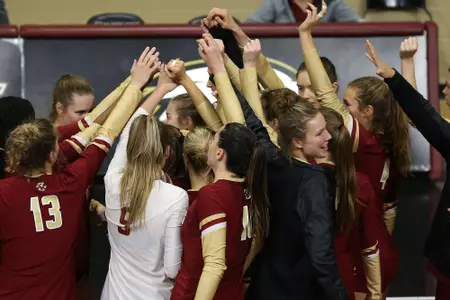
Constructing a Culture for BC Volleyball
March 07, 2018 | Volleyball, #ForBoston Files
Jason Kennedy's first days are laying the groundwork to build his program.
When he arrived at Boston College, new volleyball head coach Jason Kennedy understood the road standing in front of him. During his time at Southern California, he learned how to build a winning team, but coming to Chestnut Hill was never about building a single team. It was about building a culture and laying the foundation for a program's future, unwritten history.
To do that, he had to understand the players that he was about to start that journey with.
"When Jason got here, he did a lot of research on us," rising senior Makenna Goss said. "He did a lot of film work, so when he came in for his first practice, he knew exactly what to expect, which is really good. None of us felt like we had a stranger watching us, and he didn't feel like he was watching strangers."
Kennedy's first month at Boston College has been nothing short of a transformation for the Eagles' volleyball program. Though he brings a sterling resume built from one of the national powerhouse programs, he is willing to put an individualized stamp on the program in Chestnut Hill, something that will make playing at BC unique unto itself.
"It was really exciting to talk to Jason for the first time and hear his plan for BC volleyball," rising junior Cat Balido said. "He talked to all of us individually, asking us what position we played and about our own backgrounds. Then he gave us a brief overview and his plan for BC. It was really great to hear that plan because he has one that he wants to put into place right away."
That plan is to build BC into a successful program competing in one of the nation's best and toughest conferences. It's the understanding that it all had to start somewhere, and it started for him right away with the first practices in Maroon and Gold.
"I believe we're doing everything completely different," Kennedy said. "(The players) embraced the change. Honestly, there have been some pretty ugly days in the gym, but that hasn't had a mental impact. They all come back the next day ready to work and ready to get better."
The key for Kennedy is to install a system he believes will be successful. But the system goes beyond what happens on the court. It includes a culture where the players are dedicated to doing the work while remaining relaxed. It's a high-octane approach on the court while maintaining the fun aspects of an individual's playing style.
"One of the biggest things I learned is that this is going to be a process," Kennedy said. "About three years ago (at USC), we decided to change the way we trained pretty dramatically. We changed the way we ran our offense, and we changed the way we ran our defense. The first year we did it was not pretty in the spring, but by the fall, we were the No. 1 team in the country for most of the year."
"He will do things like play music in practice because he wants us to have a super comfortable environment so we're not afraid to make mistakes," Goss said. "When you're learning new skills, there's always a learning curve where things get worse before they get better. He understands that, so he will say it's okay when we make mistakes. He knows that we'll eventually get the hang of concepts and get better, which is great for the team."
It's a culture project that doesn't begin with one year or end with another. It's a constantly evolving, fluid process that can change every month and every year. It's built by the commitment of the individuals, both at the coaching and player level, with the intention of improving with a uniqueness to every year.
"It was amazing to me to see how far we progressed from January to November," Kennedy said of his time in Los Angeles. "(There is an) understanding that this is a process and every year is a new process with a new group of girls, starting from square one and building a team to have for that year. It means how good we are in January and February doesn't dictate how good we can be in October and November."
Understanding that progression is infectious among the athletes. They know the road isn't an overnight trip, but the Eagles are already embracing the new challenges and opportunities ahead. They understand the clear-cut objectives on any given day, and that will help them improve as the season draws nearer.
"He came in and said, right away, that he wanted to do certain things with a plan to reach our goals," Balido said. "That got everyone really excited, and it got everyone ready to go and improve for practice."
But furthering the progression isn't limited to on-court or in-game success. Kennedy accepted the position knowing that Boston College stresses more than just wins and losses. Building a winning culture comes with the added opportunity to incorporate the Jesuit values of service above self. BC athletes are constantly striving for more than just practice and games with a burning desire to further the individual into greater causes and character.
"The character piece has been simply outstanding," Kennedy said. "I've had individual meetings with each of the girls and what their vision is for what they want to do after Boston College - where they want their degree to take them. It's pretty profound. People at this university are not here to just get a degree."
There are programs everywhere that are capable of putting together a roster for a winning season here or there. Winning at Boston College, however, requires the culture that builds on the total package, with excellence in academics, athletics and service to others. That's something Jason Kennedy understood when he accepted the position, and it's something he's setting out to do with his first band of Eagles.
"They're here to make change and make a difference. Everyone around them - faculty, staff, other coaches - it's their job to help them through that. This is so much more than a four-year experience, and that's come across pretty strong in the first days here."
To do that, he had to understand the players that he was about to start that journey with.
"When Jason got here, he did a lot of research on us," rising senior Makenna Goss said. "He did a lot of film work, so when he came in for his first practice, he knew exactly what to expect, which is really good. None of us felt like we had a stranger watching us, and he didn't feel like he was watching strangers."
Kennedy's first month at Boston College has been nothing short of a transformation for the Eagles' volleyball program. Though he brings a sterling resume built from one of the national powerhouse programs, he is willing to put an individualized stamp on the program in Chestnut Hill, something that will make playing at BC unique unto itself.
"It was really exciting to talk to Jason for the first time and hear his plan for BC volleyball," rising junior Cat Balido said. "He talked to all of us individually, asking us what position we played and about our own backgrounds. Then he gave us a brief overview and his plan for BC. It was really great to hear that plan because he has one that he wants to put into place right away."
That plan is to build BC into a successful program competing in one of the nation's best and toughest conferences. It's the understanding that it all had to start somewhere, and it started for him right away with the first practices in Maroon and Gold.
"I believe we're doing everything completely different," Kennedy said. "(The players) embraced the change. Honestly, there have been some pretty ugly days in the gym, but that hasn't had a mental impact. They all come back the next day ready to work and ready to get better."
The key for Kennedy is to install a system he believes will be successful. But the system goes beyond what happens on the court. It includes a culture where the players are dedicated to doing the work while remaining relaxed. It's a high-octane approach on the court while maintaining the fun aspects of an individual's playing style.
"One of the biggest things I learned is that this is going to be a process," Kennedy said. "About three years ago (at USC), we decided to change the way we trained pretty dramatically. We changed the way we ran our offense, and we changed the way we ran our defense. The first year we did it was not pretty in the spring, but by the fall, we were the No. 1 team in the country for most of the year."
"He will do things like play music in practice because he wants us to have a super comfortable environment so we're not afraid to make mistakes," Goss said. "When you're learning new skills, there's always a learning curve where things get worse before they get better. He understands that, so he will say it's okay when we make mistakes. He knows that we'll eventually get the hang of concepts and get better, which is great for the team."
It's a culture project that doesn't begin with one year or end with another. It's a constantly evolving, fluid process that can change every month and every year. It's built by the commitment of the individuals, both at the coaching and player level, with the intention of improving with a uniqueness to every year.
"It was amazing to me to see how far we progressed from January to November," Kennedy said of his time in Los Angeles. "(There is an) understanding that this is a process and every year is a new process with a new group of girls, starting from square one and building a team to have for that year. It means how good we are in January and February doesn't dictate how good we can be in October and November."
Understanding that progression is infectious among the athletes. They know the road isn't an overnight trip, but the Eagles are already embracing the new challenges and opportunities ahead. They understand the clear-cut objectives on any given day, and that will help them improve as the season draws nearer.
"He came in and said, right away, that he wanted to do certain things with a plan to reach our goals," Balido said. "That got everyone really excited, and it got everyone ready to go and improve for practice."
But furthering the progression isn't limited to on-court or in-game success. Kennedy accepted the position knowing that Boston College stresses more than just wins and losses. Building a winning culture comes with the added opportunity to incorporate the Jesuit values of service above self. BC athletes are constantly striving for more than just practice and games with a burning desire to further the individual into greater causes and character.
"The character piece has been simply outstanding," Kennedy said. "I've had individual meetings with each of the girls and what their vision is for what they want to do after Boston College - where they want their degree to take them. It's pretty profound. People at this university are not here to just get a degree."
There are programs everywhere that are capable of putting together a roster for a winning season here or there. Winning at Boston College, however, requires the culture that builds on the total package, with excellence in academics, athletics and service to others. That's something Jason Kennedy understood when he accepted the position, and it's something he's setting out to do with his first band of Eagles.
"They're here to make change and make a difference. Everyone around them - faculty, staff, other coaches - it's their job to help them through that. This is so much more than a four-year experience, and that's come across pretty strong in the first days here."

Players Mentioned

RS
/ VolleyballNo. 24 Baseball Defeats Duke (April 18, 2026) - Game 2
Sunday, April 19
No. 24 Baseball Defeats Duke - April 18, 2026 Game 1
Saturday, April 18
No. 24 Baseball Defeats Duke (April 17, 2026)
Friday, April 17
#24 Baseball Defeats UConn (April 15, 2026)
Wednesday, April 15